
The Rise of the ‘Engineer’: How Marketing Job Titles Are Becoming More Masculine
* This article was written by Lyle Hendriks, Lead Copywriter at BNL, without the assistance of generative AI.

If you’ve found yourself in the (unenviable) position of searching for a job in the marketing field in 2026, you might have started to notice a shift. No, we’re not talking about steadily increasing job responsibilities, stagnant wages, or the way certain social media pros have rebranded themselves as C-suite executives. We’re talking about a subtle, but important shift in the job titles themselves—namely, the way they’ve become ‘masculinized’ as marketing becomes more accessible than ever.
Understanding ‘Masculine’ and ‘Feminine’
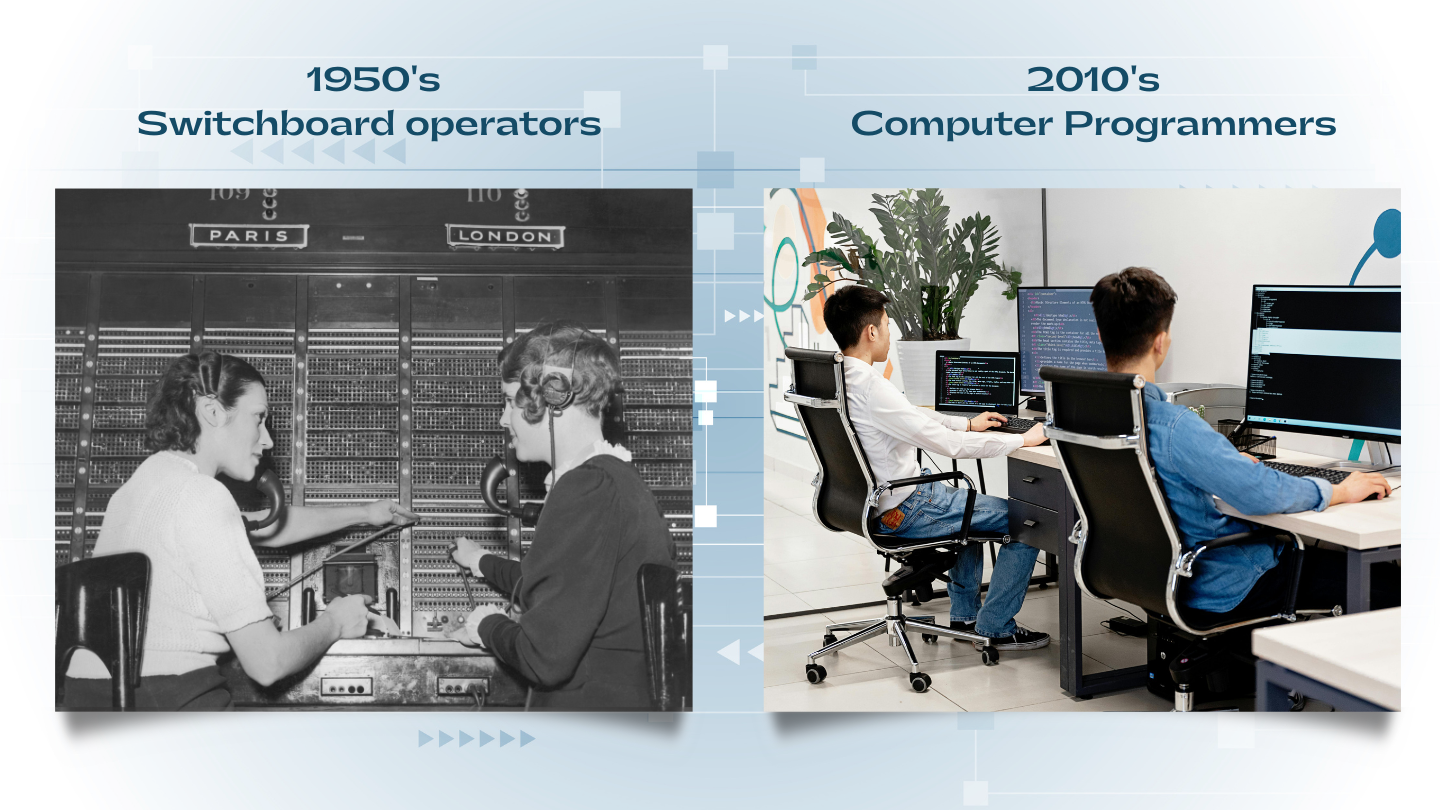
Using gender-based terms to discuss job titles might seem a little out there, but it’s actually rooted in our history and the way we’ve looked at work throughout modern history. In a short video on the topic, brand consultant Miranda Shanahan talks about the ways certain jobs have been traditionally assigned to certain genders throughout history.
At one time, computer programming was considered a secretarial role, much like connecting calls and keeping schedules. It seems hard to believe, given how male-dominated the field of computer programming has become, but there was a time when computing and programming were predominantly done by women, leaving the ‘masculine’ jobs of the creation of physical products to men.
However, there was a shift around the time of the first personal computers in the 1980s. Suddenly, computing and programming were accessible and tangible rather than a humdrum behind-the-scenes job best left to women. As the industry grew exponentially, so did the profit and status associated with it. And from here, it’s no surprise that men swooped in, scooped up the jobs in the industry (or invented new, high-level roles for themselves), and took the credit and profits from the women responsible for pushing the field forward.
Today, we need to shift our understanding of masculine and feminine somewhat in order to understand the subtle but important industry shifts. Of course, you’re not going to see job listings for ‘Male Marketing Coordinator’ or ‘Female Social Media Manager’. Instead, it’s a minor shift in language that plays upon preconceived notions of what’s considered masculine or feminine.
Understanding Gendered Language in Job Titles
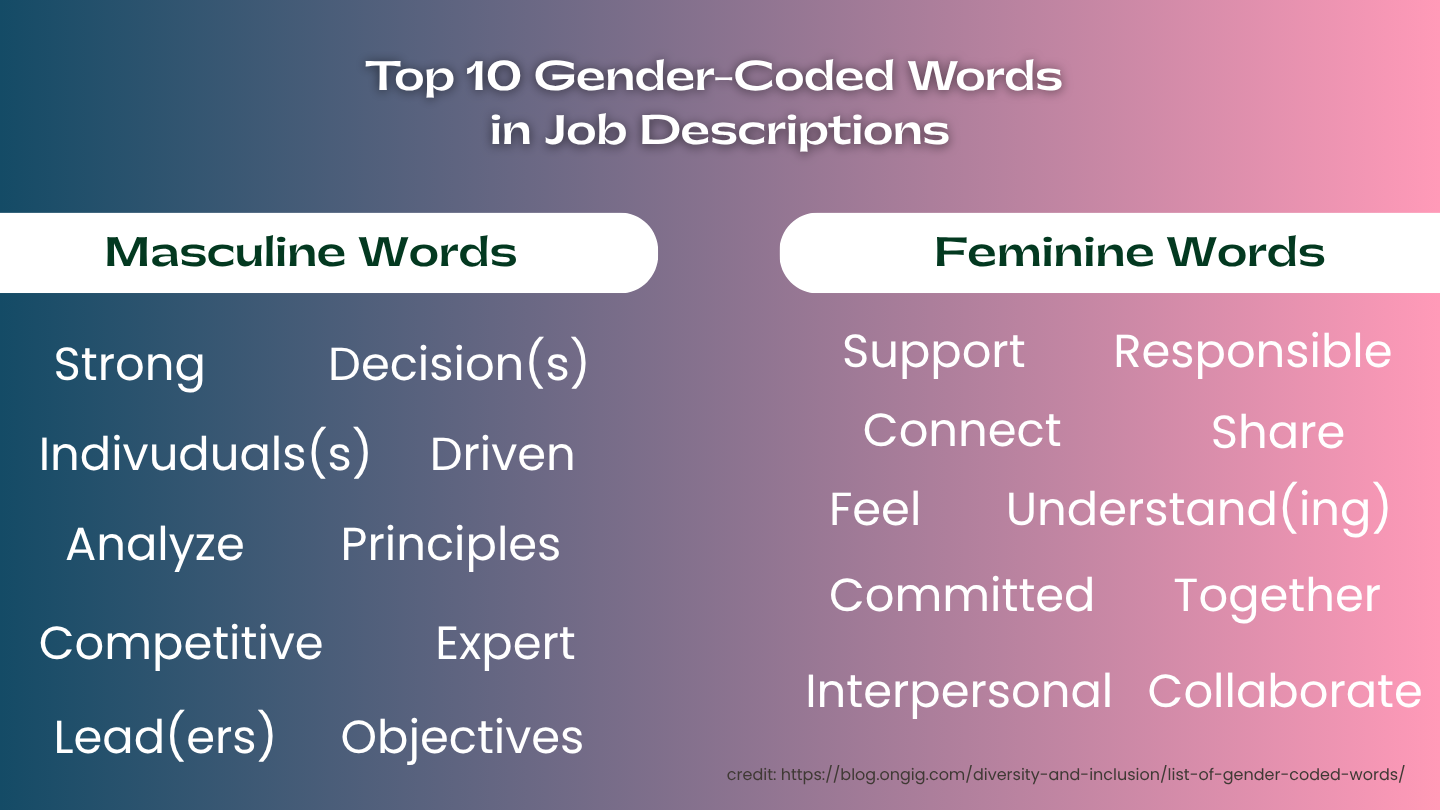
Thanks to basic human rights and protections, it’s no longer legal to discriminate between job applicants based on aspects like gender, sexuality, or race. But nevertheless, it’s impossible to ignore the way marketing job titles are shifting towards a more traditionally masculine lexicon, subconsciously pushing women away from fields that they have every right to thrive in. Here are a few examples of language shifts we’ve noticed across the industry:
Brand Managers ➡️ Narrative Engineers, Growth Engineers
Marketing Managers ➡️ Growth Systems Managers
Marketer ➡️ Marketing Engineers
Marketing Director ➡️ Chief Revenue Officers, Chief Commercial Officers
Head of Marketing ➡️ Chief Social Media Officers
You’ll notice a huge emphasis on technical terms and roles in these new job titles. Companies are leaning into terms like ‘engineer’ as a way to appear more credible, position themselves as technical experts, and, in some cases, align with language that makes investors happy. In other words, ‘engineer’ is being used as a catch-all term for ‘serious, important work,’ despite these roles requiring no actual engineering of any kind.
So marketing job titles are becoming more technical—but what does that really have to do with gender? This is tricky to discuss. After all, women are in no way disallowed from becoming engineers—but the fact of the matter is that they’re severely underrepresented in the fields of civil, mechanical, and electrical engineering—in other words, actual engineering.
Studies have shown that certain language deters female applicants from reaching out for job titles. These ‘masculine’ keywords like ‘lead’, ‘competitive’, and ‘driven’ may seem innocuous, but they show a clear shift in the way the industry is removing emphasis from women and making space for men. And before you wave this away as a coincidence, woke propaganda, or pearl clutching, remember who we’re talking about. These are marketing agencies. Keywords, demographics, and reaching the right people are literally their entire business, which means it’s no mistake when job listings skew towards keywords that attract male candidates and repel women.
By aligning these positions with job titles that have been dominated by men for virtually their entire existence, companies are subtly signalling that they’re no longer looking for women with ‘soft’ skills. It relates to an outdated view of marketing—one that presumes the job is about making stuff up, or making stuff look pretty. And in many ways, it’s a direct parallel to the way we saw women pushed out of the computer programming field between the 1960s and 1980s.
A Note on Gender vs. Gendered Language
To some, all of this language about the masculine and feminine might feel a little contrived, especially in a world where gender is no longer the strict binary it was once viewed as. There are a million ways to express your gender, and of course, leading with masculinity or femininity in your work doesn’t necessarily mean you’re a man or a woman.
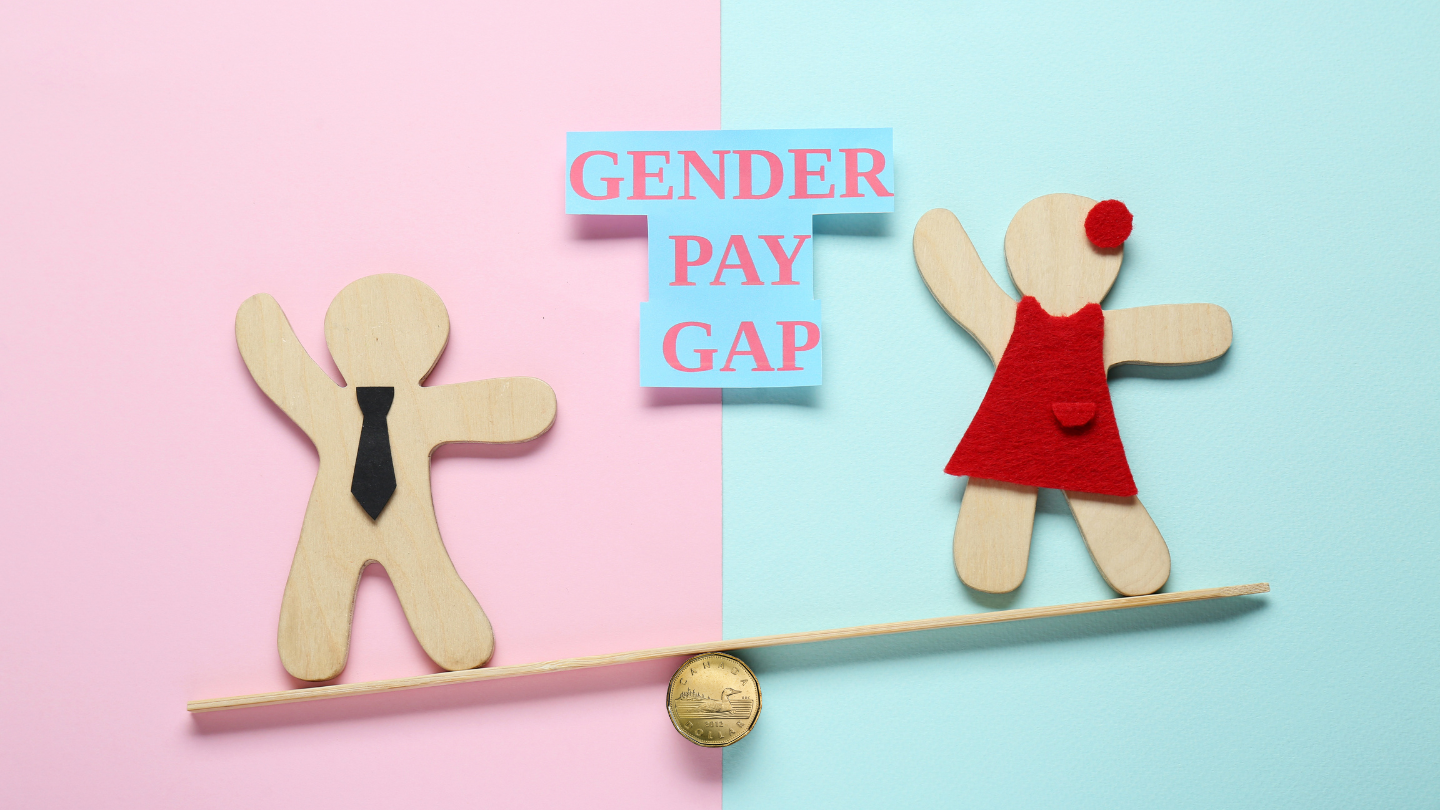
Regardless of how you think about the duality of masculine and feminine, it’s still worth considering the historical obstacles faced by women and feminine-presenting people in the workforce. Women are, on average, paid less, are far less likely to have executive or leadership roles, and typically still do more unpaid labour in an average week than men in the same types of roles. Even as our understanding of gender and the spaces between expands, these conversations on the masculine and feminine continue to be important, and are a key part of understanding why certain industries are becoming less inclusive.
How AI Is Fueling a Gendered Industry Shakeup

There’s perhaps no industry that has been more brutalized by AI than computer programming. At least with writing and other creative pursuits, some still value the ‘human touch’ of authentically created work. But with programming, it’s different. Your code either works or it doesn’t. And unfortunately for the generation of kids who were told their whole lives that software and coding were surefire ways to secure their future, AI has turned out to be really, really good at programming.
So now that AI has all but replaced the need for technical skills like programming, the focus in the marketing sphere has shifted. What used to be about content creation, branding, and narrative is now about data, implementation, and analysis.
It used to be up to marketers to find that unique story and that special thing about each client, and to craft a narrative that put it at the forefront for us to connect with. A marketer would sit down with a brand, learn what sets them apart, and craft a bespoke marketing approach that highlights it. A marketing engineer, on the other hand, would likely use AI to boil down the brand into a bullet list of key points, and then use those points to develop a boilerplate marketing strategy with the singular, all-important goal of scaling. Efficient? Certainly. But at the same time, this approach lacks the nuance, awareness, and creativity of the old, ‘softer’ way—the process that made marketing a business of humans.
Now that more agencies are (ironically) relying on machines to find this human thread, marketing ‘engineers’ are tasked with babysitting AI agents, implementing findings from huge sets of market data, and generally looking for computer-powered shortcuts to help their clients grow, grow, grow, no matter the cost to the relatable, human side of the brand.
Simultaneously, the perception of marketing is shifting from a tangential, frivolous, ‘feminine’ field into a technical, high-status role worthy of newfound respect that, let’s face it, is usually reserved for men.
At a time when people’s trust in what they see online is at an all-time low, it’s no surprise that this is a difficult time to be in the marketing world. As marketing agencies transform from the narrative-driven, creative outfits they once were to the intensely growth-focused, corporate ‘engineering’ centres we’re seeing today, it’s important to pay attention to implicit bias and subtle language that steers the field in the wrong direction.
Choosing Your Marketers with Intention

If you’re as sick of hearing the word ‘engineer’ as we are, we’ve got good news for you. There are still marketing agencies out there that focus on stories, brands, and all those other ‘soft’ skills that aren’t getting automated anytime soon because, let’s face it, they’re much harder to master. There are still agencies that put women at the forefront, or, in our case, are founded, managed, and led completely by women, and we’re a perfect example.
Does this mean we’re doing our own secret codes in hiring ads to make sure we never have to deal with a man on the team? Of course not. We welcome anyone to work with us, as long as they’re ready to focus on creativity over ‘engineering’, intuition over scaling for no reason, and community building instead of soulless networking.
We don’t just hire women, and we certainly don’t just hire men. We work with creative, clever people, empowering them to bring the very best of their feminine and masculine energies to the table. We lead from the feminine, but are supported by voices and viewpoints from across the spectrum, and that’s where we draw our power as a breath of fresh air in the increasingly cold, corporate, and often overly masculine world of ‘growth marketing’.
If you’re on the hunt for a women-led agency that aligns with your values and isn’t participating in gross online manipulation tactics to turn its boardroom into a boy’s club, BNL might be what you’ve been looking for. Our team is women-led, compassionate, and treats every client with the care they deserve. We value the softer, ‘feminine’ skills that make marketing great, while still making use of the most advanced tools and technology at our disposal to make sure you’re never falling behind.
To learn more about what makes BNL stand out, and how we can make YOU stand out just as much, don’t hesitate to get in touch with us today!