
Epstein, MAGA, and Psychological Warfare on Social Media
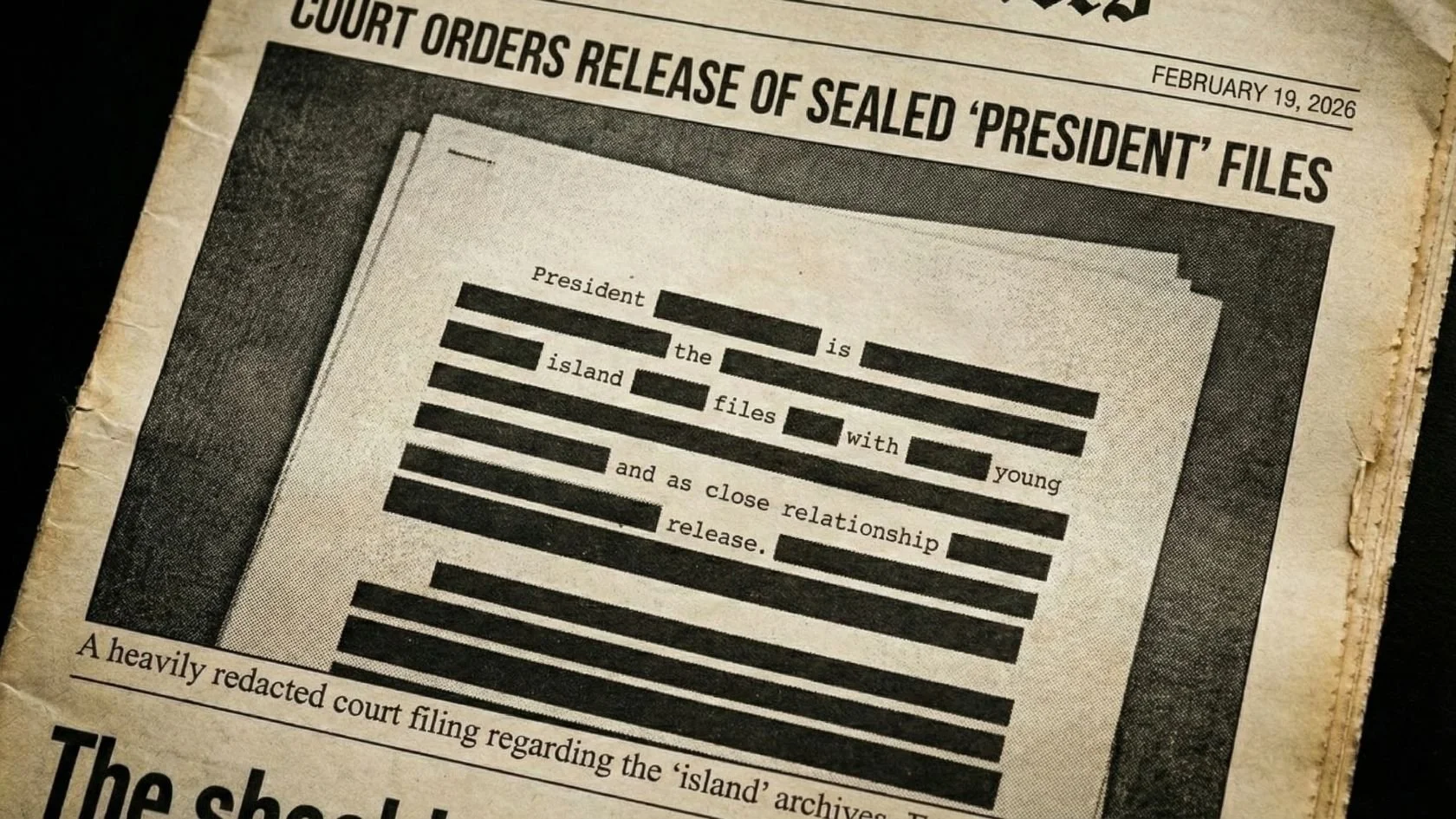
*Content Warning: This article contains non-detailed mentions of child abuse and exploitation. Reader discretion is advised.
**This article was written by Lyle Hendriks, Lead Copywriter at BNL, without the assistance of generative AI.
American presidential scandals are nothing new. From Richard Nixon’s infamous Watergate incident to Ronald Reagan’s Iran-Contra Affair, the American people are no strangers to uncovering the shocking conduct and conspiracies their leaders take part in when they think no one’s watching. But in the nation’s entire history, no presidential controversy has ever reached the loathsome depths of Donald Trump’s involvement with Jeffrey Epstein.
At the moment, congresspeople are battling to release all the files related to the infamous child sex trafficker and geopolitical fixer Jeffrey Epstein and his accomplices. Meanwhile, the Department of Justice has been doing its best to delay the process, fighting every step of the way to limit the files released, redact key information, and even removing published files that implicate the President.
Finally, the DoJ made a major step (though likely not of their own accord) and released a whopping 3 million pages of documentation. This might seem like a victory, but many are pointing out issues with this release. Despite the volume, these are not the complete files—many of them are still classified for reasons unknown, and of those that have been released, the personal details of many offenders have been redacted.
Despite campaigning on promises of releasing the Epstein files and prosecuting the criminals named within, it seems that the government is now doing everything in its power to delay, devalue, and dilute this shocking information. And, as we looked at in a previous article, the best way to keep on track with this agenda and maintain approval among the American people is with social media. Keep reading to learn how the MAGA party is leveraging the worst parts of social media to hide in plain sight, even as the most shocking controversy in presidential history unfolds before our eyes.
How We Got Here
Donald Trump’s relationship with Epstein is no longer a secret. We’ve heard a million different stories from the President on this subject, ranging from ‘knowing him very well’ to claiming no involvement whatsoever. But despite what he may say, the evidence is clear—Donald Trump was friends with Epstein, spent considerable time on his infamous island, Little Saint James, and likely knew at least some of the depraved, atrocious acts that went on at Epstein’s parties for the elite.
Despite being elected on promises to release the files, the government quickly began to dig in its heels once in office. The reason for this change in tune isn’t known, though the conspiracy-minded (who seem to have increasingly valid points) argue that powerful people are stepping in to ensure they aren’t implicated by any information coming to light.
However, it quickly became clear that even MAGA voters weren’t willing to just forget about a sinister network of global elites systemically abusing children. This, combined with intense pressure from Democrat and Republican lawmakers alike, led the DoJ to actually fulfill their promise of releasing the files—at least, some of them.
What started as a small trickle of files and photos tactically released by the Democrats has now resulted in more than 3 million pages of evidence being released to the public. At first glance, it seems like a promise fulfilled. But take a closer look, and you’ll see the stomach-churning ways that this ‘disclosure’ leaves more questions than answers.
MAGA’s Playbook for Bad News

Trump’s MAGA party has a simple but effective approach to news they don’t like. And a look at how the government has handled demands to release the Epstein files shows this playbook in full effect.
First, they distract. Trump ratchets up tariffs, bombs Iran, terrorizes American cities with ICE, and kidnaps the President of Venezuela due to alleged cartel connections. Social media explodes as Americans on both sides of the aisle argue about these unprecedented actions. The dialogue gets thoroughly bogged down as the MAGA-faithful chant for blood, and the neoliberal left calls for unity and peaceful protests.
But of course, this isn’t enough to distract from something as potent and earth-shaking as the Epstein files. So they enter phase two: Lying, gaslighting, shifting the goalposts. Trump says it’s time to ‘move on’ from the Epstein files, despite almost zero accountability or justice for the survivors.
That’s not enough either. Remember that many Republican voters supported Trump this past election because of his promise to unseal the Epstein files. So what’s the solution? Information overload.
The DoJ releases files by the millions—a deluge of emails, photos, and other evidence. Claims of child abuse and sexual exploitation with thousands of victims. Stomach-turningly casual correspondence between Epstein and others, discussing young girls as though they were livestock. There are even darker (so far unsubstantiated) allegations, including infanticide and even cannibalism.
The content of these files is beyond disturbing. What makes them worse is that the vast majority of them have the names of offenders redacted, seemingly to protect their identity—even as personal details of victims are left intact. What seems at first glance to be an authentic attempt at disclosure is quickly revealed for what it is: Information overload.
Trauma, Overwhelm, and Psychological Warfare

Distracting from the Epstein files didn’t work. Neither did lying about it. Now, the MAGA party is opting for the next weapon in their arsenal: All-out psychological warfare.
While some people have made efforts to parse through the Epstein files, including one person who made a platform allowing you to browse Epstein’s email inbox, this simply isn’t possible for most people. Reading 3 million pages of anything is a tall order, but when the contents are this shocking and horrifying, you may begin to see why the MAGA party took this approach to releasing it.
When experiencing or learning about something violent, traumatic, or obscene, one of the only things that can help us make sense of it is an overall narrative. When we can trace sickening events from genesis to completion, we can at least place them in our minds, using the concept of cause and effect to help reconcile such sickening crimes with our understanding of the world. But that’s not what we got with the Epstein file releases.
Instead of a detailed report explaining this situation, we got snapshot after snapshot of some of the most horrific crimes imaginable. Stripped of time, place, context, and the names of the offenders, these are almost inconceivable atrocities—and that’s no mistake. By taking these crimes out of sequence, they become less tangible. Rather than a shocking story of depravity, we get an assortment of moments—each horrible in its own right, but none of them fitting neatly into a greater picture.
This approach to declassifying the Epstein files doesn’t just stop the average person from understanding the situation fully. They stop us from placing certain people, including the President, within them. Releasing the files in a massive, disorganized dump makes it easier to hide facts, remove incriminating evidence, and usher the conversation along. Rather than zooming out and realizing that the elites of our world are, as a rule, above the law, we focus in on key pieces of evidence, arguing with other working-class people about context and verbiage instead of having the most important conversation: The most powerful people in the world were there. The President was there. And they all knew.
The Role of Influencers and Content Creators in the Epstein Files
Social media is one of the most important ways the MAGA party has maintained its support so far. And as they attempt to survive the media firestorm of the Epstein files, they’ve leaned on this tactic even more.
One good example is the sudden influx of influencers, YouTubers, and social media creators jumping on the Epstein bandwagon. It’s incredibly cynical to say, but the controversy and visceral horror of this topic make it a content goldmine for good-faith truthseekers, ignorant clout-chasers, and malignant propagandists alike. Because, for all of the traumatic details found in the files, it’s too horrible to look away from.
Crime-focused social media accounts like @justinthenickofcrime have recently pivoted their content to be almost exclusively about the Epstein scandal. Popular scam exposer YouTuber Coffeezilla has seen a massive surge of growth on his second channel, now primarily focused on his takes on the Epstein affair. And of course, there’s no shortage of ‘centrist’ influencers offering their unqualified (often AI-researched) takes on the situation, stoking the flames of conspiracy further.
The social media circus surrounding this so-called investigation has been exacerbated by the way names have been revealed in the file releases to date. It follows the tabloid architecture of news, allowing people to focus on key figures like Bill Gates and Elon Musk, without asking the more important question: Whose names are we not seeing?
Social Media: The Epstein Smokescreen

Social media conversations on Epstein have so far followed the dialogue architecture of legacy media. With each release, coverage from major news sources focuses on personalities: Who was named, what their allegations are, and which figures are now under pressure. This leads to pointless social media arguments as normal people parrot legacy media headlines. Right-wingers point to the presence of Democrat Bill Clinton in the files, as though that excuses figures like Trump, Elon Musk, and other MAGA darlings from being right there with him.
Continuously, stubbornly, the conversation remains divided along the wrong line: Left versus right. At this point, it should be clear that a bipartisan elite comprised Epstein’s client list. Left and right-wing ideology plays no factor—these are rich, powerful people who, for all intents and purposes, lived above the law for years. They weren’t divided by ideology. They were united by status.
The conversation we need to have is one of class. Whoever you voted for in the last few elections, your taxpayer dollars have gone to a long series of administrations on both sides of the aisle. Governments that, at best, allowed Epstein to continue his horrific crimes, and at worst, actively participated in them.
So far, the exploding topic of the Epstein files hasn’t pushed most people over this edge. They continue to fight over identity politics, stubbornly backing up an elite cabal that only cares for the working class long enough to abuse and exploit them. And thanks to the insidious, possibly politically compromised algorithms that fuel social media, it’s all too easy for people to get sucked into pointless arguments with other regular people instead of looking up and realizing the real issue at hand.
A New Era

The scandal of the Epstein files is ongoing. While some justice is seemingly being served, including the arrest of former Prince Andrew and the UK’s former US Ambassador Peter Mandelson, the question remains: What’s next in these turbulent times?
It remains to be seen whether the American elite will truly face justice over the shocking details of the Epstein files. Many agree that there’s more than enough evidence to impeach and possibly prosecute Donald Trump (along with a huge number of others), but considering the current government’s penchant for imperialism and fascist rule, there’s no guarantee that we’ll receive true accountability at the moment.
In the meantime, bipartisan efforts are being made to release the remainder of the Epstein files and declassify the identities of offenders named within. While we can only hope that these efforts are successful, it’s also important to take a look at ourselves and determine our own role in cutting through the noise, demanding the truth, and winning some semblance of justice against the elite.
The Risks of Getting News from Socials in 2026

We’ve come a long way since the debut of Trump’s concept of ‘fake news’ back in 2016. And while it might have been something of a meme at the time, it’s clear to see that this was really a fascist government sowing the seeds of mistrust in the media. It’s a long con that’s finally paying off for Trump, aided by the rapid acceleration of disturbingly realistic AI-generated content, some of which is being pushed out by official White House social accounts.
As if there wasn’t enough mistrust in the words of the government and the media, Trump’s administration now has the ability to call the veracity of photo and video evidence into question. And with AI’s rapid improvement, it’s getting more and more difficult to know how to spot AI-generated content. And considering most people aren’t scrutinizing the content they see all that hard, it’s no surprise that the waters are getting murky as we struggle to find the truth.
People have been using X’s Grok AI to ‘unredact’ censored images and documents found in the files, and then taking these ‘findings’ as hard proof. In reality, this unthinking machine has no way of knowing what’s hidden behind these black rectangles. It uses context clues to make a guess, but that’s all it is—a guess. The real question is, why are these black rectangles there in the first place?
Resetting Your Perspective

Ideological divides have arguably never been deeper in North America. What started as disagreements on borders, immigration, and crime has extended to deep, far-reaching animosity on the nature of justice itself. As it seems like the world turns upside down, we have a few words of advice for anyone who’s been keeping up with the Epstein saga over the past couple of years.
It’s tempting to dive into heated online arguments with people who somehow still support the fascist tactics of the MAGA party. But at the end of the day, these people aren’t your enemies—even if you disagree on everything.
You can be left-wing without being a liberal. You can be right-wing without being a MAGA supporter. In fact, we recommend it. There’s no doubt that previous administrations, including Clinton, Bush, Obama, Trump, and Biden, all allowed Epstein’s crimes to continue during their terms, whether or not they had any personal involvement. Some of these governments may have been less harmful than others, but that doesn’t mean any of them truly represent you. At the end of the day, left and right-wing leaders simply serve one group of billionaires, media moguls, and tech founders, or the other.
The real divide isn’t between arbitrary lines of left or right. You, them, and 99% of the entire world are working-class people, finding your way through life and its many struggles. Understand who is truly responsible for these crimes: Governments, billionaires, tech founders, intelligence agencies, and world leaders.
Ultimately, we’re beyond the point of social media discourse doing anything to improve matters. So instead of getting sucked into political doomscrolls or pointless online arguments, take some time away from your screens. Talk to people in real life. Organize and volunteer your time for local community support. Learn about the facts from reliable sources instead of compromised social media personalities and pundits.
Understand that the overwhelm, fatigue, and exhaustion that come with following this subject are all by design. The ruling class wants you to be so tired and confused that you give up on the truth. They want you watching the Super Bowl, arguing over immigration, and fighting with your crazy, racist uncle. They want you disoriented, disillusioned, and defeated. And the only way to stop this is to limit their access to your psyche.
We’re not saying to bury your head in the sand. It’s never been more important to stay informed, but it’s also never been harder to find quality reporting and real news on the topics that matter. When you zoom out from interpersonal conflict and identity politics, you’ll see that the issue was never left or right. It’s a matter of the elite versus the working class. The 1% versus the 99%. The ‘untouchable’ versus the entire world.
Justice for the victims of Epstein and his many friends won’t be coming today, tomorrow, or, in reality, any time soon. The road ahead is long, difficult, and full of twists, turns, and traps. And the only way we have a chance of making it through is if we stop fighting one another, find common ground, and demand accountability from those who exploit us.
Navigating Socials in Troubled Times

Navigating social media through controversy has always been a real concern for businesses, social media managers, and other professionals. Despite the unbridled evil being slowly revealed in the Epstein files through the medium of socials, these platforms continue to be essential for brands, businesses, and entrepreneurs.
We know how difficult it can be to post about your latest product or an upcoming promotion when heavy news like this is circulating on social media. We know how easy it is to feel like you’re taking up space that ought to go towards social justice issues, and how challenging it is to stay consistent when the attention is (quite rightly) elsewhere.
As social media professionals, we’ve been following this entire controversy closely, paying attention to the ways it affects the platforms and the people who use them. Things are getting serious, and more and more, people expect to see horrible news, violent content, and outright malicious lies when they open these apps. While we’re expecting this trend to continue, that doesn’t mean it’s impossible to find and grow your own audience on social media.
Using social media in an average, everyday way doesn’t have to take away from the gravity of horrible situations like this. But in order to make sure you’re running your account properly while still being respectful of the way this news impacts your community, you need social media expertise on your side.
At BNL, we work hard to analyze the online climate through even the most troubled times, helping small business owners find their calm spot in the rough seas of social media. If you’re looking for clarity and confidence on socials, our team is here to help.
Get in touch to learn how we can help guide your brand with sensitivity, grace, and authenticity.