
The Future of Social Media in Executive Leadership
Most companies still treat social media like an afterthought.
It’s something that gets added on at the end of a campaign. It’s handed off once the “real” strategy has already been decided. It’s viewed as execution rather than influence. And that’s exactly why Megan’s TEDxWestVancouver talk feels so timely.
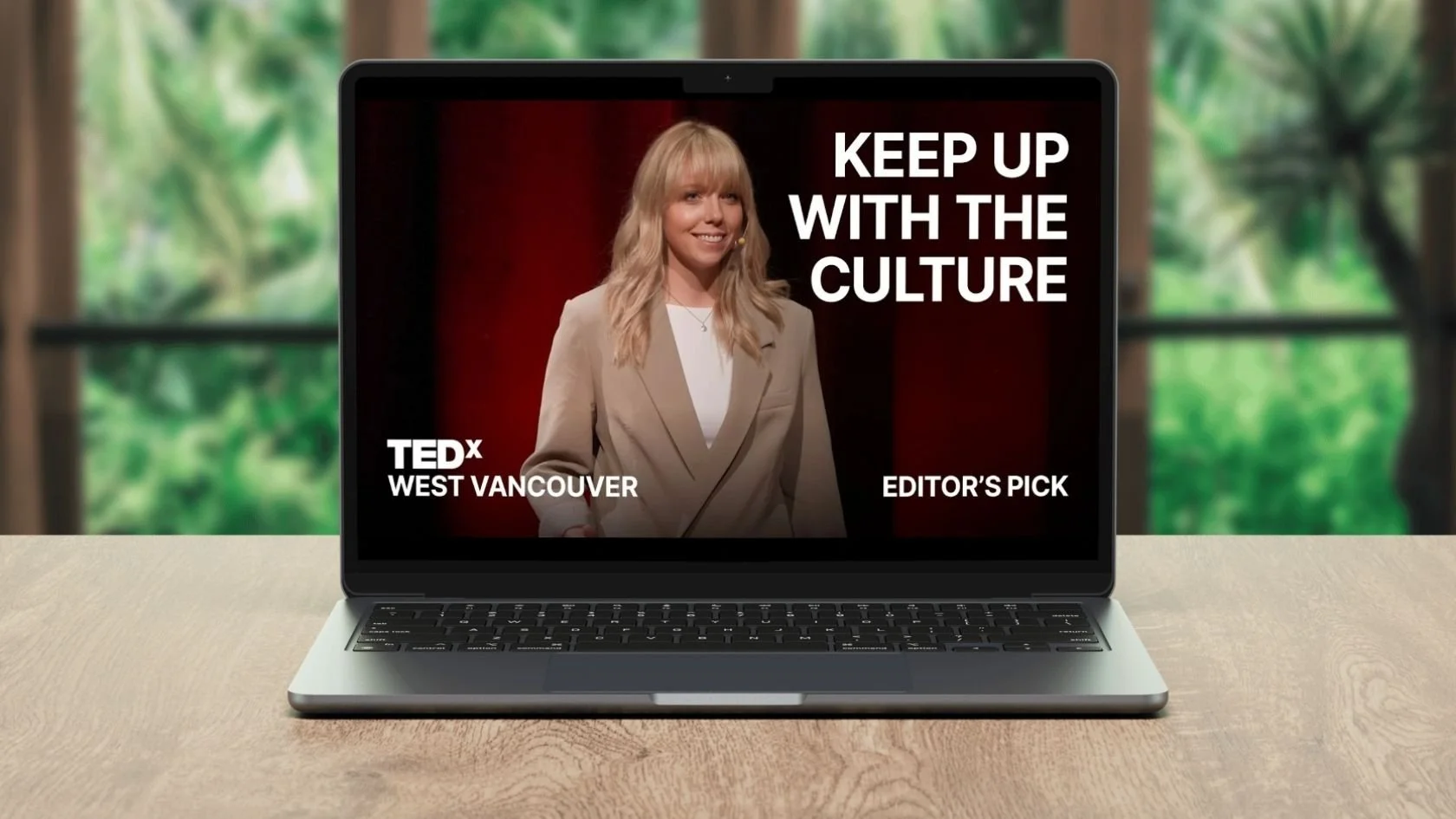
Her talk, “Why Social Media Deserves a Seat in the C-Suite,” was officially released on YouTube and named Editor’s Pick, an honour awarded to less than one percent of speakers. Watching that recognition unfold has been an incredibly proud moment for our team at BNL Social, but more importantly, it felt like validation of a conversation that has been building for years.
In her talk, Megan asks a question that tends to stop leaders in their tracks: Why isn’t there a Chief Social Media Officer?
The Evolution of Social Media and the Leadership Gap It Created
Not someone who schedules posts. Not someone who reports on engagement metrics after the fact. But an executive-level role, someone responsible for interpreting what’s happening in the digital space and translating it into business strategy.
Because the role of social media has evolved far beyond this responsibility going to the intern.
Over the past decade, yes decade, social platforms have quietly become one of the most powerful sources of real-time business intelligence available. Every comment, share, DM, review, and conversation reveals something about what customers care about, what they love, what didn’t land and what they’re frustrated with.
The strongest brands aren’t just creating content. They’re listening closely. They’re noticing when sentiment shifts. They’re paying attention to the language their audience uses. They’re catching trends before they become headlines. They’re testing ideas in real time and watching how people respond.
That isn’t just marketing. That’s strategy.
Modern Strategy Is Collaborative
After years of working alongside talented CMOs and leadership teams, one thing has become increasingly clear to us at BNL: business strategy is no longer purely top-down. It’s collaborative. It’s layered. It’s informed by the people closest to the audience.
And often, the person closest to the audience is the social media lead.
When social is treated as a support function, it becomes reactive, and by then it’s already too late. It’s asked to promote something once decisions are already locked in. But when social is treated as a strategic and fluid function, it changes how decisions get made in the first place. It influences product launches. It informs messaging pivots. It shapes customer experience. It protects brand reputation. It even impacts revenue.
Social media today is real-time market research, brand sentiment analysis, community building, and customer feedback rolled into one. It’s a living, breathing, in real time, pulse check on your business.
So the question isn’t whether social media matters. The question is whether its voice is represented at the decision-making table.
The Future of Social Media in Executive Leadership
Watching Megan deliver this message to a standing ovation was powerful, not just because of the applause, but because of what it represents. Leaders are ready to rethink the power of their digital marketing. They’re starting to recognize that social media isn’t a megaphone, it’s a feedback loop. It isn’t a cost centre, it’s a strategic advantage.
If you haven’t watched the talk yet, you can experience the full conversation here. After you do, take a moment to reflect. Is social media treated as a strategy in your organization, or is it still seen as support?
The companies that answer that question thoughtfully will be the ones shaping what comes next.