
How Social Media is Becoming a Fascist’s Weapon of Choice
Note: This article was entirely written by Lyle Hendriks, Lead Copywriter at BNL, without the assistance of generative AI.
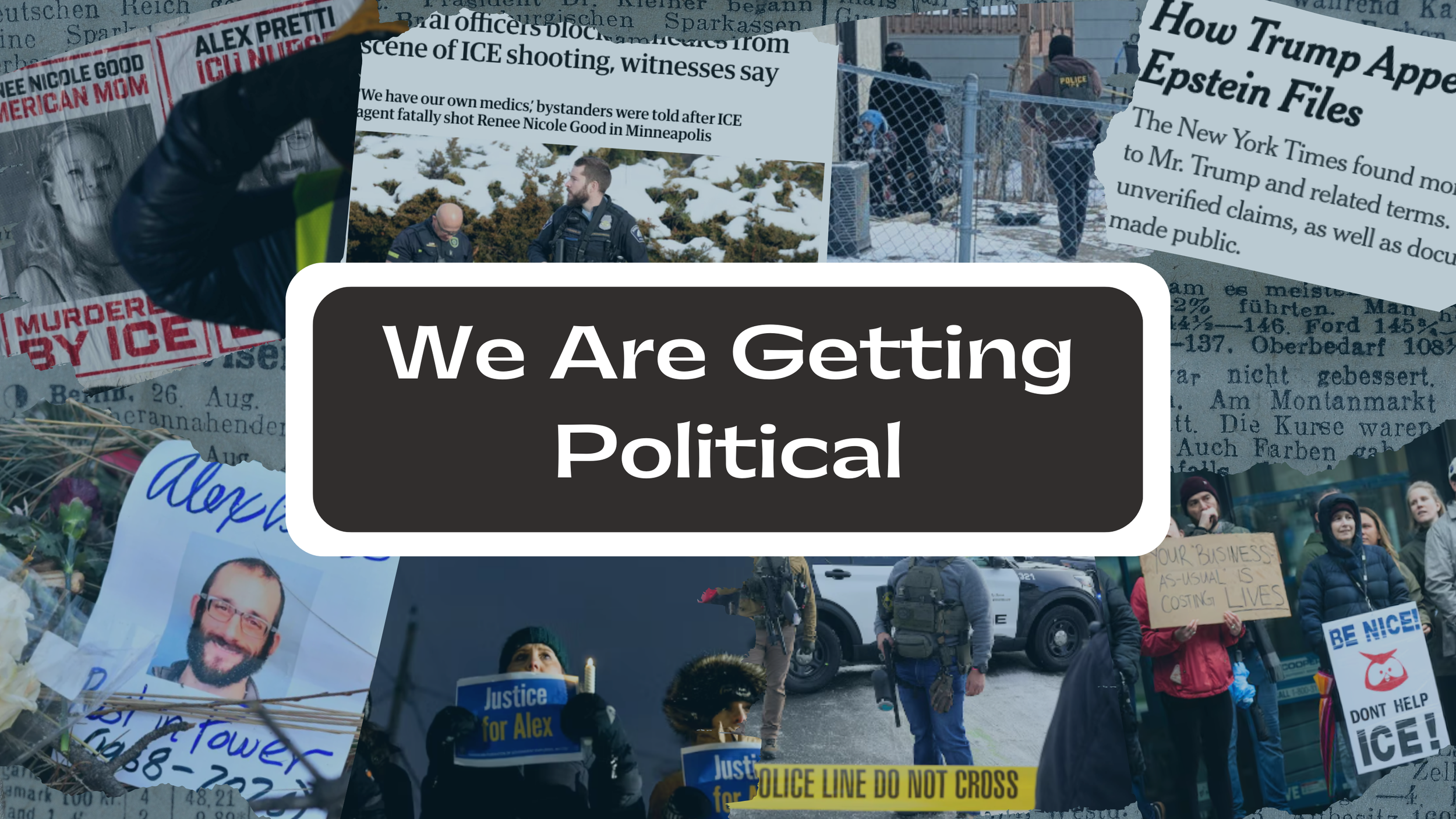
On a freezing January day in Minneapolis, Minnesota, 37-year-old mother of three, Renee Nicole Good, is shot and killed by Immigration and Customs Enforcement (ICE) officer Jonathan Ross after allegedly attempting to ‘weaponize her vehicle’ against ICE officers. After Ross shoots Good in the arm, chest, and head, an ICE agent is heard on video, calling Good a ‘f***ing b*tch’. The agents block ambulances from the scene with their vehicles for a time. She is eventually transferred to a nearby hospital, where she dies.
Just a couple of weeks later and a few blocks away, Alex Pretti, a 37-year-old ICU nurse for the US Department of Veteran Affairs, is tackled to the ground by seven or more ICE agents, who shoot him at least 10 times. The summary execution is initially justified due to claims that Pretti was holding a gun while attempting to protect an EMT from an attacking ICE agent. In reality, video footage from multiple angles shows he was holding nothing but a cell phone. The EMT that Pretti was protecting attempts to give him CPR. She is restrained by ICE agents. Pretti dies on the ground moments later.
In the wake of these horrific killings, the Federal Government refers to them as domestic terrorists, would-be assassins, insurrectionists, and agitators.
Despite thorough video footage of both killings, government officials told the public not to believe their eyes. To understand the grave risk that Renee Good posed to heavily armed ICE agents with her Honda SUV. To see Pretti’s cell phone as a gun. To see these people as criminals who deserved to be murdered in the street. As enemies.
As Americans clash in the greatest culture war in recent memory, misinformation has reached new heights. Doctored, AI images of both the Good and Pretti incidents are created. Some claim they’re attempts to ‘enhance’ the image as a way to prove ICE’s wrongdoing.
Senators display AI images during speeches. Deepfake video is viewed tens of millions of times on X. And through it all, no one seems to know whether what we see is real or not anymore.
This isn’t the first time we’ve covered controversial, political topics on the BNL blog. We’ve looked at the power of political echo chambers, the way social media influences elections, and the way violent content has become a new norm on platforms like Instagram. In these posts, we’ve always stepped back from hardline political opinions. Phrases like ‘however you feel about this’ or ‘regardless of your views’ used to be enough to sidestep the worst of political discontent. But really, how can we stand by and claim to be neutral anymore?
(Mis)Information Overload
Even as convicted felon and known child abuser President Trump plunges the United States into a new era of fascism, xenophobia, and hatred, there are some things that never change. Turn your mind to history and recall the last time a federal police force swept the nation to arrest ethnic minorities and place them in concentration camps, and you’ll see how much of the playbook remains to this day.
Fascism relies on two main channels of power: Violence and misinformation. Through extreme acts of state-ordained violence, the government commands fear-based control over its population. And through a murky, ceaseless discharge of misinformation, blame is shifted from the perpetrators of that violence to the state’s enemy of choice. But while late 1930s Germany relied on pamphlets, leaflets, and spirited speeches from the Führer, the fascist misinformation campaigns we see today add entirely new dimensions to the process.
More than half of all Americans get at least some of their news from social media platforms like X, Facebook, YouTube, and Instagram. Considering the tendency of these platforms to adjust their algorithms based on engagement, and not on truth or objectivity, it’s no surprise that they’re one of the Trump administration’s favourite weapons in the misinformation war.
How Social Media and AI Help Trump Keep Control
Time and time again, the MAGA party demands that common people trust their words over tangible evidence. Just one look at the disingenuous, almost laughably disrespectful ‘attempts’ to ‘release’ the Epstein files without incriminating Trump and his friends will help you understand what we mean.
The same goes for the killings of Renee Good and Alex Pretti in Minnesota. First, they’re terrorists. And then, they’re not terrorists, but they have guns. And then they don’t have guns, but they were menacing and intimidating ICE agents. And then the gun isn’t a gun, but a cell phone. And then the video is AI. And before long, you’ve heard so many conflicting accounts from authorities that you don’t know what to believe anymore.
Now, anyone who hasn’t completely succumbed to the easy answers of Trump’s fascist vision of America can probably parse out the truth somewhat. Through a systematic pushing of the boundaries, ranging from election fraud to attempted insurrection, Trump has again and again sought to normalize his violent, monarchical approach to leadership. Decorum and precedent mean nothing anymore. The paramilitary death squads of ICE can invade cities, kidnap children, and murder citizens indiscriminately without fear of reproach. And anyone who dares oppose is a terrorist, a woke agitator, or a mindless sheep who’s been fooled by the radical left’s AI propaganda.
This onslaught of information and misinformation is like an impenetrable cloud of black ink, something for us to get lost in as the disgusting, pale squid that loosed it slinks away into the darkness. Fascists don’t need to give us all the ‘answers’—they just need to sow enough doubt for regular people to tear each other apart while the elite continue to do what they please.
There are literally too many examples of AI misinformation, malicious context removal, and outright lies on social media to name. Deepfaked images of Homeland Security detainees, altering regular people to make them easier to hate. Removal of images that incriminate the President from the Epstein files.
These betrayals of whatever trust the people had in their government further erode the basis of society as we know it, pushing us into a new era of overt corruption and universal immunity for even the most horrific crimes.
What You Can Do When It Feels Like You Can’t Do Anything
If you think even remotely the way we do, you’re probably beginning to feel like the frog in the boiling water. Unfortunately, we allowed things to get this far—though none of us can be blamed individually. As the horrors of past genocides and fascist takeovers fade from generational memory, it’s perhaps no surprise that we find ourselves doomed to repeat history.
How you choose to respond to the rise of fascism as a person who still has compassion for humans regardless of race, status, or citizenship is up to you. It’s especially tricky here in Canada—we’re not directly involved, but the threat of fascism entering our own government looms daily. Some are putting the pressure on Canadian companies to cut ties with ICE. Some are building up grassroots organizations on the frontlines of the fight against fascism. Some are taking direct action, facing off against ICE agents in massive protests—after grabbing a can of soup for their families, of course.
Whatever action you feel called to take, now is the time. While there are social media-specific things you can do to help, it’s time to be real: The situation is quickly devolving beyond anything online discourse can help. Instead, we want to encourage you to learn a little about the algorithms that rule these platforms, understanding that their motives are to keep you on the platform at all costs—often through fear and outrage. Learn to scrutinize everything you see online, especially if it reinforces your beliefs. The more inflammatory it is, the more likely that it’s been altered or generated.
And most importantly, understand that real change can no longer be affected through social media. The state is murdering people in the streets. So instead of posting infographics and policing the language of people around you, switch off, tune out, and focus on supporting your community, whether that’s your family, your friends, your neighbourhood, or your entire city. Performative online resistance and social media virtue signalling haven’t stopped this government yet, and they’re certainly not going to start working now.
These are hard, almost impossible times for many of us. Remember that community, connection, and compassion for one another are, at least for now, the strongest weapons we have to fight back.